Financial Performance Analysis (Valero vs PBF Energy)
Project Overview
This project conducted a thorough comparative analysis of two prominent independent refiners, Valero and PBF Energy, during the unprecedented market disruptions from 2019–2022. The primary objective was to assess the impact of contrasting managerial strategies employed by these companies, such as Valero’s defensive discipline and PBF’s opportunistic leverage, on their financial performance during the COVID-19 crisis and the subsequent recovery period.
Data Collection & Preparation
Data Preparation & Methodology: To derive meaningful insights from raw financial data, I utilized Excel to construct dynamic financial models, aggregating data directly from the companies' annual 10-K filings. My process focused on two primary analytical techniques:
Vertical Analysis (Common Size Statements): Converted all line items to a percentage of revenue (Income Statement) to assess cost structure stability and efficiency independent of company size.
Horizontal Analysis (Trend Analysis): Calculated absolute and percentage changes across key periods (2020 vs. 2019 and 2022 vs. 2020) to isolate the magnitude of the pandemic crash and the velocity of the recovery.
Data Standardization - Standardized six years of historical data (2018–2023) extracted from 10-K reports, correcting formatting inconsistencies and aligning accounting periods to ensure an apples-to-apples comparison.
Valero Analysis - The Defensive Strategy
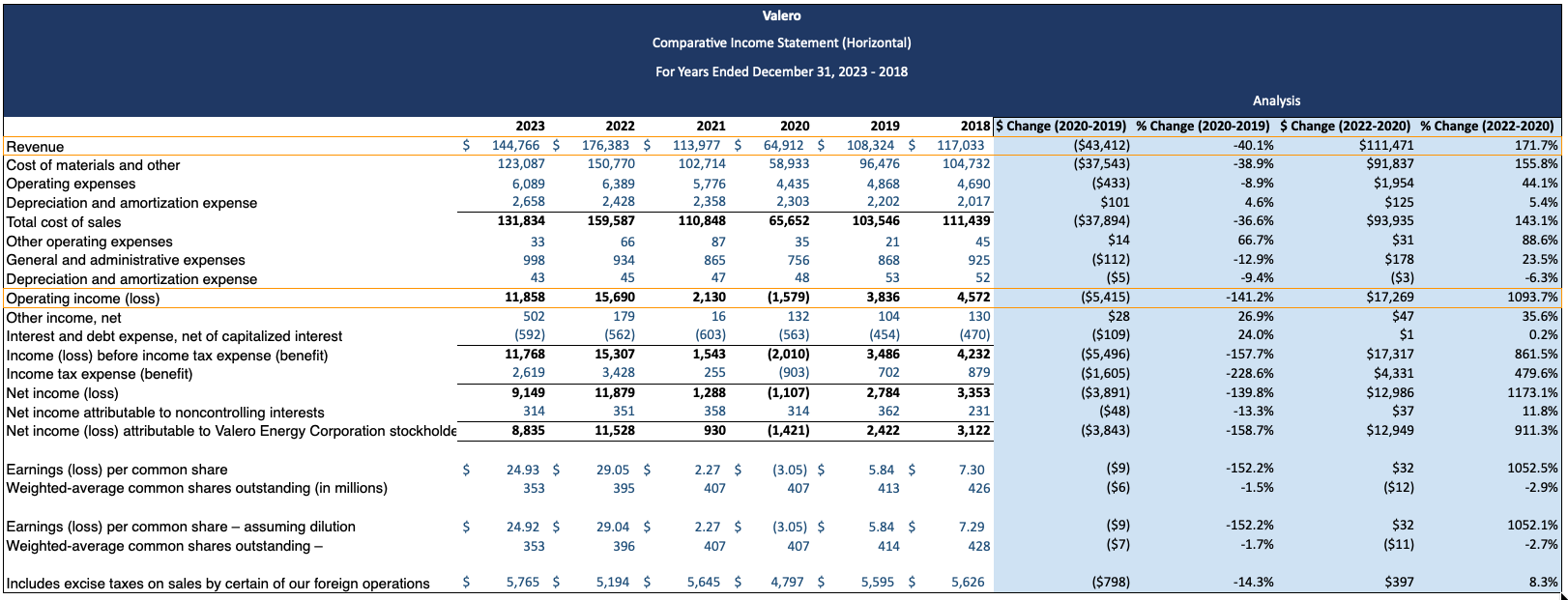
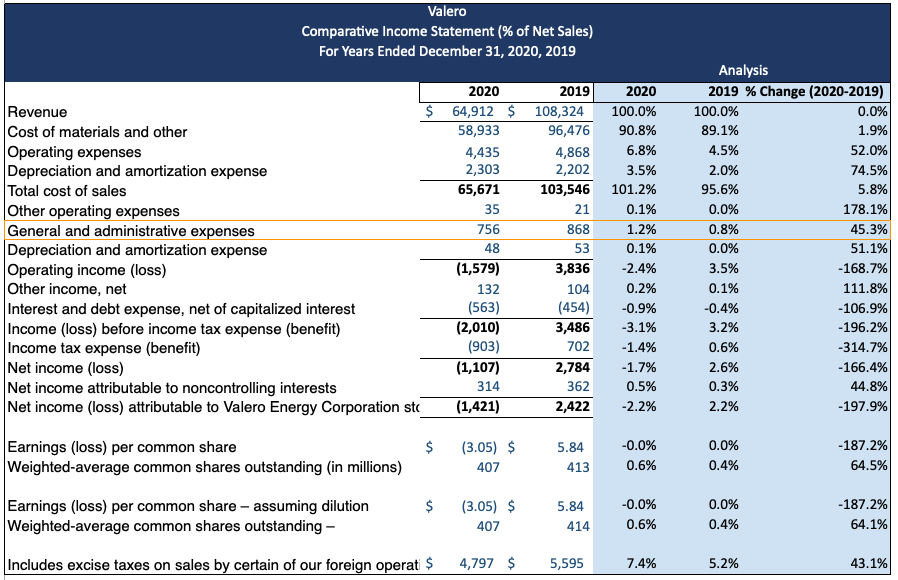
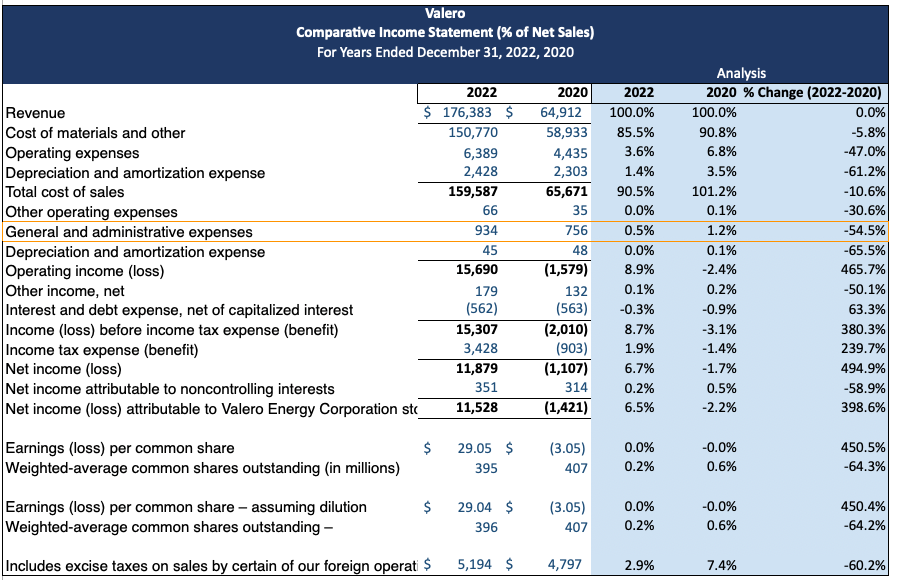
Insight: Discipline Under Pressure
The analysis reveals Valero’s ‘Defensive Strategy,’ characterized by tight operational control.
Cost Structure Stability: Even as revenue collapsed by over 40% in 2020, Valero’s Vertical Analysis shows that General & Administrative (G&A) expenses remained flat at approximately 1% of sales. This remarkable efficiency protected the company’s foundation.
Steady Recovery: The Horizontal Analysis demonstrates a controlled rebound. By 2022, operating income surged from a loss to over $15 billion, driven by a stable cost base rather than aggressive leverage. Valero prioritized minimizing downside risk, resulting in a smoother, more predictable recovery path.
PBF Analysis
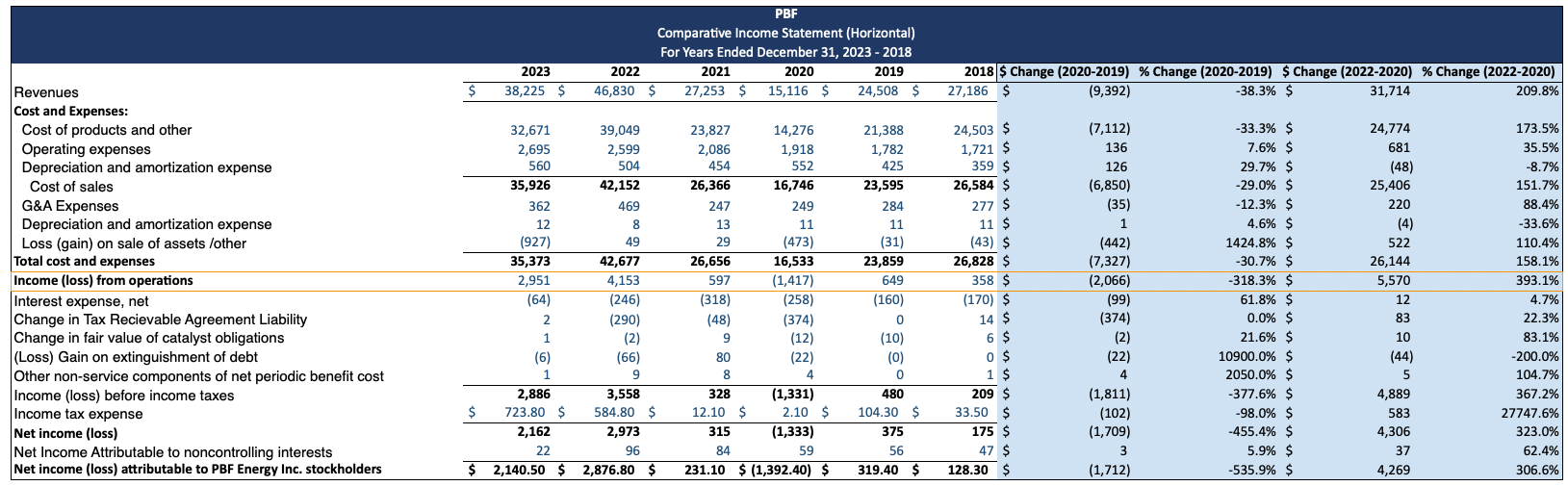
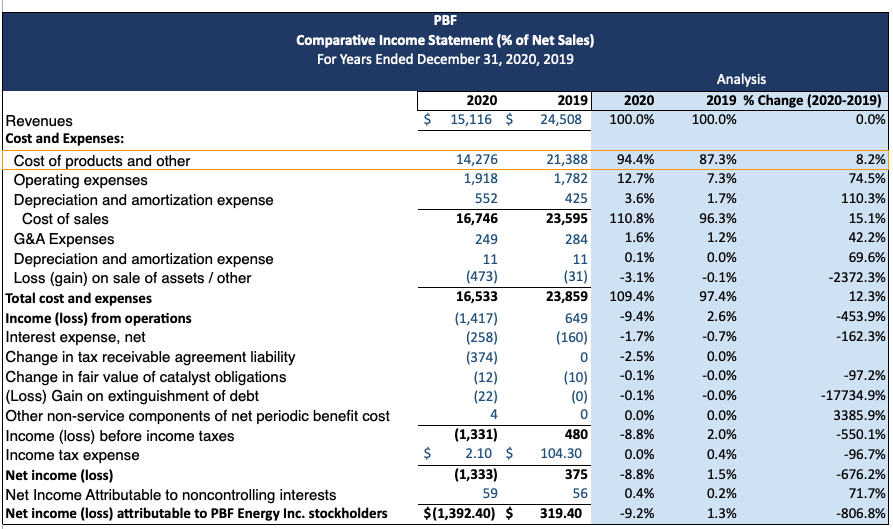
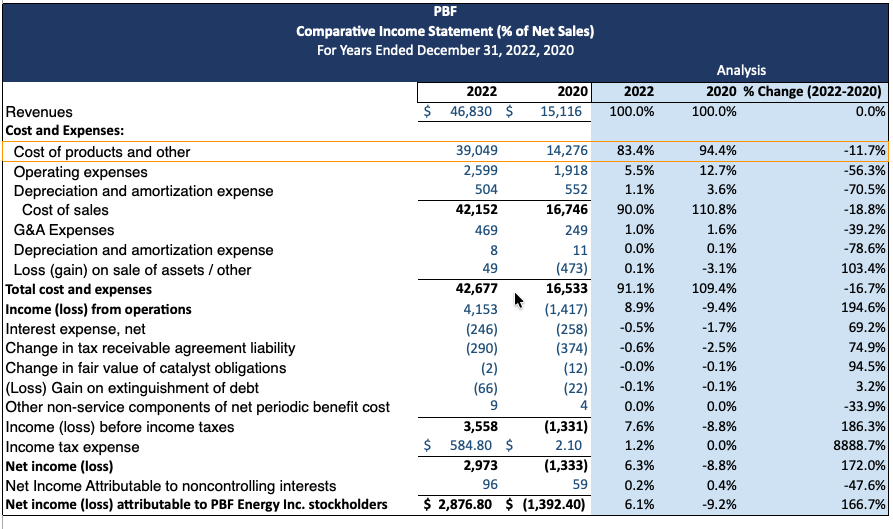
Insight: Amplified Volatility
In Contrast, PBF Energy pursued an ‘Opportunistic Strategy’ defined by higher operating leverage.
Structural Vulnerability: The Horizontal data for 2020 shows that PBF’s operating income fell at a much steeper rate than its revenue decline, confirming high sensitivity to market downturns.
High-Beta Recovery: However, this same leverage acted as rocket fuel during the recovery. Between 2020 and 2022, PBF’s revenue tripled, and it achieved a massive swing from significant losses to a $5 billion gross profit. PBF accepted deeper volatility in exchange for maximizing upside capture when market conditions improved.
Key Findings
Cost Structure Matters: Companies with disciplined overhead (Valero) weathered the downturn more effectively than those with high fixed obligations.
Leverage Cuts Both Ways: Operating leverage amplifies performance in both directions—PBF's losses deepened faster in 2020, but their recoveries accelerated faster in 2022.
Market Timing Is Critical: Both companies recovered strongly by 2022, but the path varied: Valero prioritized stability, while PBF prioritized speed.
Strategic Conclusion - Two Paths to Profitability
This comparative analysis underscores that there is no single ‘correct’ strategy in managerial accounting, only strategic trade-offs.
Valero succeeded through resilience, effectively ‘insulating’ itself from the worst of the crisis through cost discipline.
PBF succeeded through agility, positioning itself to disproportionately benefit from the market rebound.
Both companies returned to strong profitability, but their distinct paths reflect fundamentally different approaches to risk management and shareholder value creation.